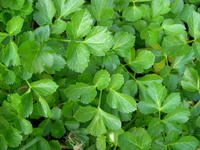
Smyrnium olusatrum A biennial relative of Celery and Angelica, once widely cultivated in the Mediterranean for its fleshy petioles before Celery became a well-domesticated vegetable. MM. Vilmorin’s The Vegetable Garden (1885) describes the growing technique. Seed is sown in flats or in place during late August. After about 8 weeks of wet chilling hardy seedlings emerge, and are transplanted as soon as they can be handled. Leafstalks are hilled (like Celery) as they quickly grow through early spring, and are eaten prior to bolting in early summer. The flavor is related to Celery, but milder. Said to have been a daily part of Alex The Great’s diet, hence the name. ‘Spose to be good for you. Definitely good for beneficial insects. Seeds Per Packet: 80 Seeds Per Ounce: 800
Peace This came to us long ago from Peace Seeds, and has found a niche in The Wild Garden as part of the perennial insectary windbreak. Large black seeds produce vigorous seedlings, and will naturalize easily if integrated into a hedgerow polyculture. A good candidate for further domestication into a winter vegetable, more hardy than parsley. pricing and more
info...